
Secured Asset Loan vs Payday: Which Suits?
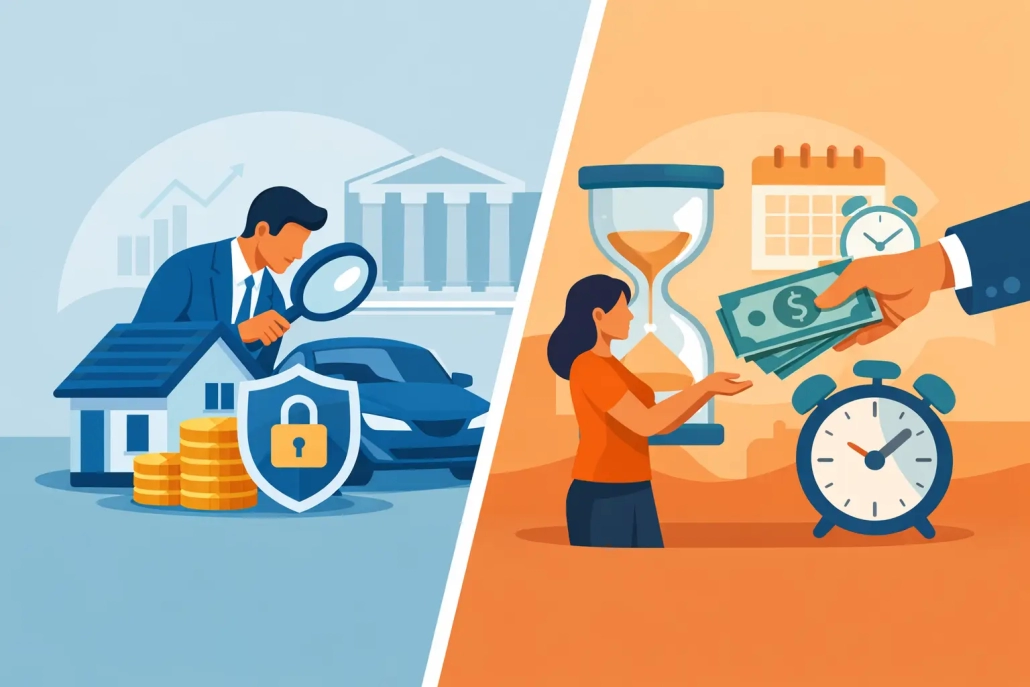
A secured asset loan vs payday comparison comes down to one practical question: do you have a vehicle or piece of equipment with enough value to use as security? If you do, an asset-backed loan may give you a clearer path to urgent cash than applying for a small unsecured payday loan. But both options have costs, deadlines and real consequences if you cannot repay.
When bills are due, the car needs repairs or your business has a short cash-flow gap, speed matters. It also pays to know exactly what you are agreeing to before you sign anything.
Secured asset loan vs payday: the key difference
A payday loan is generally an unsecured short-term loan. The lender assesses whether you can afford repayments, usually using your income, bank transactions and regular expenses. You do not put up an asset as security, but approval can still depend on the lender’s checks and affordability assessment.
A secured asset loan is backed by something you own. With vehicle pawnbroking, that may be a registered, unencumbered and roadworthy car, ute, motorbike, truck, van, caravan, boat, jet ski or machinery. The lender assesses the asset’s resale value rather than relying on your credit score or payslips.
That difference changes the risk. A payday lender cannot take a specific vehicle simply because you miss a repayment, although unpaid debt can still lead to collection action and damage to your finances. With an asset-secured loan, the asset is the security. If you do not meet the agreed terms, you could lose it.
Neither choice is automatically right for everyone. The better option is the one with terms you can realistically meet, not simply the one that puts money in your account first.
How a vehicle-backed loan works
The process is built for people who own an asset but need cash quickly. You provide details of the vehicle or equipment, along with proof that you own it. The lender checks its condition, registration and market value, then makes an offer based on a portion of its wholesale value. At AutoPawn, loans may be advanced up to 55% of wholesale asset value, subject to assessment.
Because the security has value, a credit check or proof of income may not be required. That can help if a bank has said no, your credit history is less than perfect, or you are self-employed and do not have conventional payslips ready to go.
The loan amount is not based on what you would like to borrow. It is based on what the asset can reasonably support. A late-model work ute in good condition may support more than an older vehicle with mechanical issues, finance owing or registration problems.
Ask one direct question before proceeding: what happens to the asset while the loan is active? Vehicle pawnbroking arrangements commonly involve the lender holding the asset securely until you repay and redeem it. Terms vary, so get the storage, repayment date, fees and redemption process in writing.
What payday loans can cost
Payday loans are often marketed as a quick answer for smaller expenses. In Australia, small amount credit contracts have limits on certain fees, including a maximum establishment fee and monthly account-keeping fee. Those limits do not make the loan cheap.
A short repayment period can make the instalments hard to manage, especially when rent, fuel, groceries and existing direct debits are already taking most of your pay. Missing repayments can add stress at exactly the wrong time. Before accepting a payday loan, look beyond the amount landing in your account and check the total dollar amount you will repay.
You should also be cautious about repeat borrowing. Taking a new short-term loan to cover the last one can turn a temporary cash shortage into a regular drain on your pay.
Costs, approval and risk compared
The biggest advantage of a payday loan is that you do not need to own an asset. If you have no vehicle or equipment available as security, that may be your only short-term credit option apart from seeking a payment arrangement or other support.
The biggest advantage of an asset-backed loan is that the asset gives the lender a different basis for assessing the application. It can be useful for people with a valuable car or work equipment who need funds without the usual bank paperwork, income verification or credit-based approval process.
Here is what to compare before making a decision:
- Total repayment: Ask for the exact amount required to close the loan by the agreed date. Include every fee, charge and any storage cost where applicable.
- Repayment timing: Know whether you repay in instalments or as a single amount, and whether the date lines up with money you genuinely expect to have.
- What you stand to lose: Payday borrowing can pressure your future income. An asset loan puts the secured vehicle or equipment at risk if you do not redeem it.
- How quickly the money is available: Do not assume all lenders work at the same pace. Ask when funds can be released after assessment and paperwork are complete.
A lower-looking fee is not enough on its own. A loan with repayments you cannot meet is expensive no matter how it is advertised.
When a secured asset loan may make sense
A secured asset loan can suit an owner who has a clear, short-term reason for needing money and a reliable plan to repay. For example, a tradesperson may be waiting on an invoice, need to cover an urgent supplier bill or require funds to keep another vehicle on the road. A family might have a temporary gap caused by an unexpected repair or medical expense.
It can also suit borrowers who do not want a credit check to be the deciding factor. If the asset is eligible and has enough value, the condition and ownership of that asset matter more than a past default or a thin credit file.
It is not a good fit if the vehicle is essential every day and the arrangement requires you to hand it over, unless you have a workable alternative. It may also be the wrong choice if repayment depends on uncertain overtime, a hoped-for sale or money that has not been confirmed. Do not risk an asset you cannot afford to be without.
When payday lending may be the less suitable choice
Payday lending can look straightforward because no asset is involved. Yet that can hide the practical issue: repayments generally come from your next pay or several upcoming pays. If your budget is already tight, another automatic repayment may leave too little for basics.
Be particularly careful if you are considering a payday loan for regular living costs. That is often a sign that the problem is bigger than one short cash gap. Speak to your utility provider, landlord, insurer or creditor first if a payment arrangement could buy you time without creating new debt.
The same applies to an asset-backed loan. Fast cash should solve a defined short-term problem, not become a routine way to cover ongoing expenses.
Questions to ask before you take either loan
Do not settle for vague answers. Ask how much cash you will receive, the exact amount required to repay, the due date, what happens if you are late and whether early repayment changes the cost. If you are using an asset, ask who holds it, how it is stored and what happens if it is not redeemed.
Read the agreement before signing, including the fine print around fees and default. Keep a copy and make a note of the repayment date in your mobile. If anything is unclear, stop and ask. A lender that deals fairly should be able to explain the arrangement in plain English.
If you need cash fast and own a suitable vehicle or item of equipment, get a clear valuation and a clear redemption figure first. The right short-term loan should give you breathing room, not leave you guessing about what it will cost or what is at stake.



Leave a Reply
Want to join the discussion?Feel free to contribute!