
How to Borrow Against a Work Ute for Fast Cash
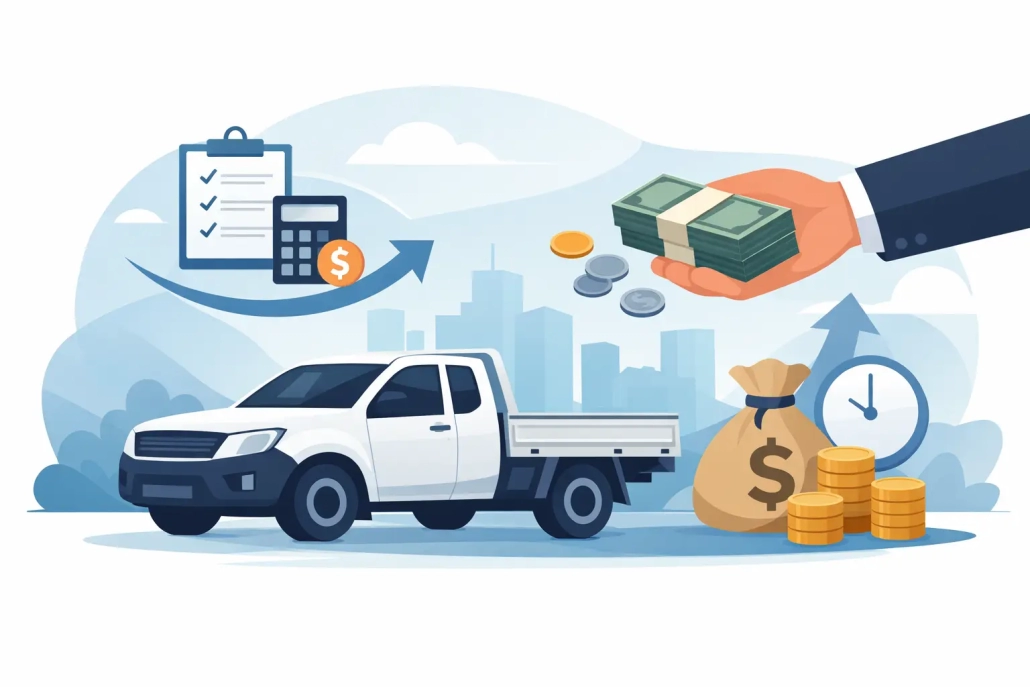
Your ute gets you to site, carries your tools and keeps work moving. When a supplier invoice, rego bill, repair or unexpected expense lands at the wrong time, you may be able to borrow against a work ute rather than wait for a bank decision.
A vehicle-backed loan uses the value in an asset you already own as security. That means the focus is on your ute and its condition, not your credit score, payslips or a stack of paperwork. For tradies, contractors and small business owners dealing with a short-term cash gap, it can be a practical way to get funds moving quickly.
What does it mean to borrow against a work ute?
Borrowing against a work ute means using the ute as security for a short-term loan. The lender assesses its current wholesale value, then offers an amount based on that assessment. At AutoPawn, loans can be advanced up to 55% of the vehicle’s wholesale value, subject to assessment.
This is different from an unsecured personal loan. With an unsecured loan, a bank or finance company mainly looks at your income, credit history, existing debts and ability to make repayments. With a secured vehicle loan, the asset does much of the talking.
That does not mean the ute is ignored as soon as the money is paid. It is the security for the loan, so you need to understand the agreement, repayment dates, fees and what happens if you cannot redeem the loan. But for the right situation, using an asset you own can be far simpler than trying to meet a mainstream lender’s criteria during a cash crunch.
Is your work ute likely to qualify?
The strongest candidates are utes that are owned outright, registered and roadworthy. A clean, well-kept dual-cab, a late-model tray ute or a reliable workhorse with service history may have meaningful lending value, particularly where demand is strong in the used vehicle market.
Your ute’s make, model, year, kilometres, condition and market demand all affect the assessment. Modifications can help or hurt value depending on their quality and appeal. A practical tray, canopy or professionally fitted accessories may support the ute’s usefulness, while damage, major mechanical issues or poorly completed modifications can reduce what it is worth.
To be considered, the key points are generally straightforward:
- You own the ute outright and it is not under finance.
- It is registered in your name and roadworthy.
- You can provide photo identification and proof of ownership.
- The ute can be inspected so its value and condition can be assessed.
If there is money owing on the vehicle, it is usually not suitable as loan security until that interest is cleared. Be upfront about finance, damage or mechanical faults. A clear assessment from the start saves wasted time when you need cash quickly.
How much can you borrow against a work ute?
The amount depends on the ute’s wholesale value, not simply the price you think it could sell for privately. Private sale figures can look attractive, especially for popular utes, but a lender must assess the realistic wholesale value and the risk involved if the vehicle has to be sold.
As a simple example, if a work ute is assessed at a wholesale value of $30,000, a loan of up to $16,500 may be possible at a 55% lending ratio. It is only an example, not a promise. The final amount depends on the ute itself and the assessment at the time.
This lower percentage is not a trick. It provides a buffer for market movement, selling costs and the condition of the vehicle. It also means vehicle equity matters. A ute worth more than the amount you need can be a useful source of short-term funds without selling it outright.
Why tradies use vehicle-backed loans when cash is tight
Cash flow can turn quickly when you run your own show. A customer can pay late, a vehicle can need repairs, materials may need to be bought before the next invoice clears, or an unexpected bill can take the edge off a good month.
Banks are not built for every urgent situation. Their process may involve credit checks, income verification, account statements and waiting for approval. That is not much help if you need to cover an urgent expense today.
A work ute loan is assessed differently. There are no credit checks and no requirement to provide proof of income. The emphasis is on the value of your registered, roadworthy and unencumbered ute. That makes it an option worth considering for people with credit issues, variable earnings or no time for traditional loan paperwork.
Speed is the other major reason. Once the vehicle has been inspected and the paperwork is in order, same-day cash may be available. AutoPawn has been helping Queensland asset owners access vehicle-backed funds since 1992, with a practical process designed for people who need clear answers quickly.
What the process usually looks like
The process starts with basic details about your ute: its make, model, year, kilometres, registration and overall condition. Photos may help provide an early indication, but a proper inspection is generally needed before a firm offer can be made.
Bring your identification, registration documents and anything that supports ownership and condition, such as service records. The lender assesses the ute, explains the available loan amount and provides the loan terms. You then decide whether the offer works for you.
Read the agreement before signing. Focus on the loan term, the total amount required to redeem the ute, fees, payment timing and the outcome if the loan is not repaid as agreed. Ask directly whether the vehicle needs to remain with the lender for the loan period and what arrangements apply to its storage and collection. Do not assume the answer – get it clear in writing.
If you accept the terms, the funds can be provided quickly, often within the hour once everything is finalised. That speed is valuable, but it should not rush you past the details that matter.
Weigh up the cost before you commit
Borrowing against a work ute can solve an immediate problem, but it is still a secured loan. The main trade-off is clear: you get access to cash without the usual credit hurdles, but your ute is backing the agreement.
Before proceeding, be realistic about how you will redeem the loan. If an invoice is due next week, a contract payment is pending or the expense is genuinely short term, the arrangement may suit your situation. If there is no clear path to repayment, using a vehicle that supports your livelihood needs more thought.
Also consider the operational impact. If the ute is essential for getting to jobs, carrying tools or earning income, ask how the security arrangement affects your access to it. The right loan should relieve pressure, not create a bigger problem for your work.
There is no benefit in borrowing more than you need just because the ute can support a higher amount. Take the amount that covers the immediate gap, keep the repayment plan practical and retain as much flexibility as possible.
Get a straight answer before selling a useful asset
Selling a work ute to raise money can leave you without transport, tools access or the ability to get to site. Borrowing against it may let you use the equity tied up in the vehicle instead, provided the loan terms and redemption plan make sense for your circumstances.
If you own a registered, roadworthy ute outright and need funds fast, have it assessed before making a rushed decision. A clear value, a clear offer and a clear repayment plan can give you room to deal with the immediate issue without giving up an asset you rely on every day.



Leave a Reply
Want to join the discussion?Feel free to contribute!