
Can You Use a Boat as Collateral for Cash?
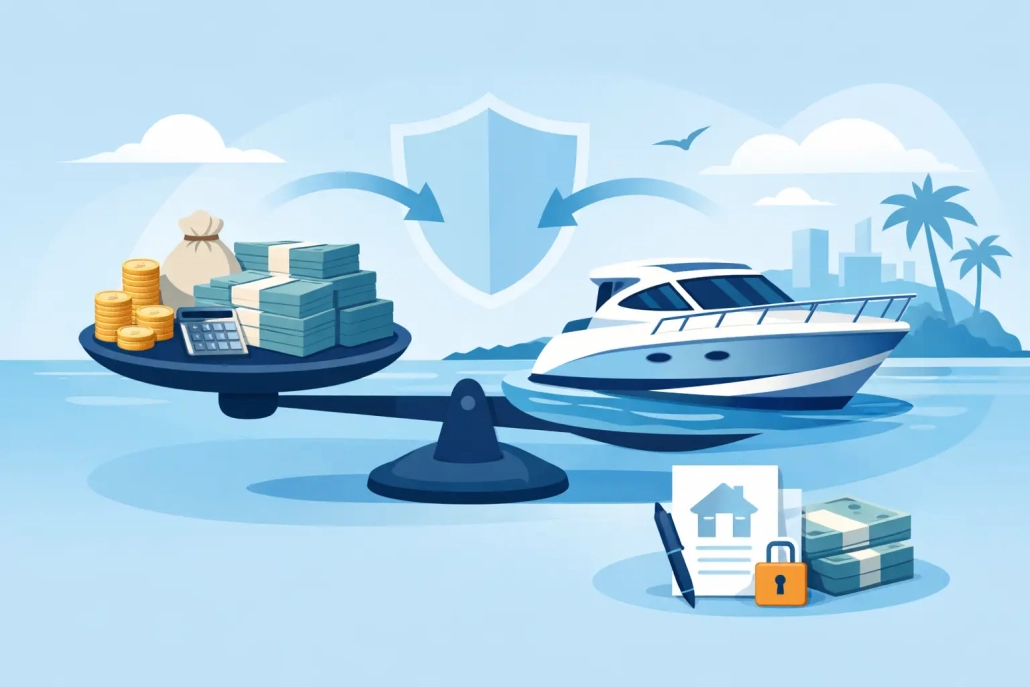
A boat can be more than a weekend escape. If you own it outright, you may be able to use a boat as collateral to raise cash for an urgent bill, business expense, repair or short-term cash-flow gap. Rather than relying on your credit score or a stack of bank paperwork, a secured lender assesses the value of the boat.
For many Queensland boat owners, that can be a practical option when money is needed quickly. The key is understanding what your boat is worth, what condition it is in and what the lender needs before making an offer.
Can you use a boat as collateral?
Yes, provided the boat meets the lender’s requirements. In most cases, the boat needs to be owned by you outright, properly registered where registration is required, identifiable and in saleable condition. A lender needs to know it can verify the asset and establish its realistic wholesale value.
This is different from an unsecured personal loan. With an unsecured loan, the lender mainly looks at your income, credit history and existing debts. When you use a boat as security, the boat does much of the heavy lifting. That can suit people who have a valuable asset but do not want a credit check, cannot wait for a bank decision or have a credit history that makes mainstream finance difficult.
The amount available is not based on what you paid for the boat or its sentimental value. It is based on its current market position, condition and likely wholesale sale value. At AutoPawn, eligible assets may be considered for advances of up to 55% of wholesale value.
What lenders look for in a boat
A well-presented, registered boat with clear ownership is easier to assess than one with missing paperwork, mechanical issues or finance still attached. Make, model, year, hull type, engine hours, trailer condition and included equipment can all affect the valuation.
Lenders will usually want to confirm the boat’s identifying details, such as its hull identification number, registration details and engine numbers. They may inspect the boat, motor and trailer to check their condition and ensure the asset matches the documents provided.
An aluminium fishing boat, centre console, cabin cruiser, ski boat or larger recreational vessel may all have lending value. The result depends on demand in the used market as well as the boat’s condition. A clean, maintained vessel with a sound trailer and service history will generally be easier to value than a boat that has been sitting unused for years.
Clear ownership matters
If your boat is under finance, it may not be suitable as collateral until that finance is paid out. A lender needs to know whether another party has a claim over it. Be upfront about any existing loan, repair issues or registration problems. It saves time and helps avoid an offer being delayed or changed later.
If the boat is jointly owned, every owner may need to be involved. If it belongs to a business, you may need documents showing who is authorised to deal with the asset.
How much can you borrow against a boat?
There is no one fixed figure because boats vary widely. A lender will assess the realistic wholesale value, not the price you hope to achieve in a private sale. Wholesale value reflects what the asset could reasonably return through an established resale channel, allowing for market demand, condition and the costs involved in selling it.
That means a late-model boat with a reputable motor, current registration and a tidy trailer may support a stronger offer than an older boat with corrosion, engine faults or incomplete documents. Extras such as electronics, covers and safety gear can add appeal, but they do not always increase the loan amount dollar for dollar.
Before applying, have a realistic expectation. Looking at comparable advertised boats can give you a rough sense of the market, but an advertised retail price is not the same as a wholesale assessment. A straightforward valuation conversation is the fastest way to find out what your boat may support.
What you may need to bring
The process is designed to be simple, but proof of ownership still matters. In most cases, you should have photo identification, registration details, proof you own the boat and any documents that help verify its make, model and condition.
Bring service records, purchase paperwork and details of recent upgrades if you have them. These can help the lender understand the asset, particularly where the boat has been well maintained or fitted with quality equipment. Make sure the boat, motor and trailer are accessible for inspection if required.
You generally do not need to supply payslips, bank statements or a long explanation of how you will use the funds when the loan is assessed against the asset. That is one reason collateral lending can move faster than conventional finance.
How a boat-backed loan works
The first step is an assessment of your boat and documents. Once the lender confirms ownership and value, you receive a loan offer with the amount, fees, repayment terms and what happens if the loan is not repaid. Read those terms before agreeing. Fast cash should still come with clear information.
If you accept, the loan is secured against the boat. Depending on the lender’s arrangement and the asset, the boat may need to be held securely for the term of the loan. Ask this question early if you need ongoing access to it for work, fishing charters or family use.
After you repay the agreed amount within the term, the loan is finalised and the boat is returned or the security is released, subject to the agreement. If you cannot repay on time, contact the lender before the due date. There may be options available, but they depend on the agreement and the lender’s assessment.
The serious trade-off is simple: your boat is the security. If you default and cannot resolve the loan, you could lose the asset. Only borrow an amount you can realistically repay from money you expect to receive.
When using a boat as collateral makes sense
A boat-backed loan can make sense when the need is urgent and short term. It may help cover an unexpected mechanic’s bill, supplier payment, rent shortfall, emergency travel, overdue account or a temporary gap between jobs. For a small business owner or tradie, getting access to funds quickly can be more useful than waiting days or weeks for a bank application.
It may be less suitable if the boat is essential to your income and you need to keep using it, or if your budget is already too tight to meet the repayment. In that case, the convenience of fast funds needs to be weighed against the risk of putting an important asset on the line.
A secured loan is not a replacement for a long-term financial plan. It is a practical tool for a short-term problem where you have an asset of value and a clear way to repay the money.
Get clear answers before you commit
Before using your boat as security, ask how the valuation is calculated, whether the boat must be stored during the loan, what the full repayment amount will be and what happens if you need more time. A reputable lender should answer directly, without confusing language or pressure.
If you own a registered, unencumbered boat and need cash without the usual bank run-around, have your documents ready and get it assessed. A clear offer lets you decide whether the funds solve the immediate problem without creating a bigger one later.



Leave a Reply
Want to join the discussion?Feel free to contribute!