
Should You Sell or Pawn Your Car for Fast Cash?
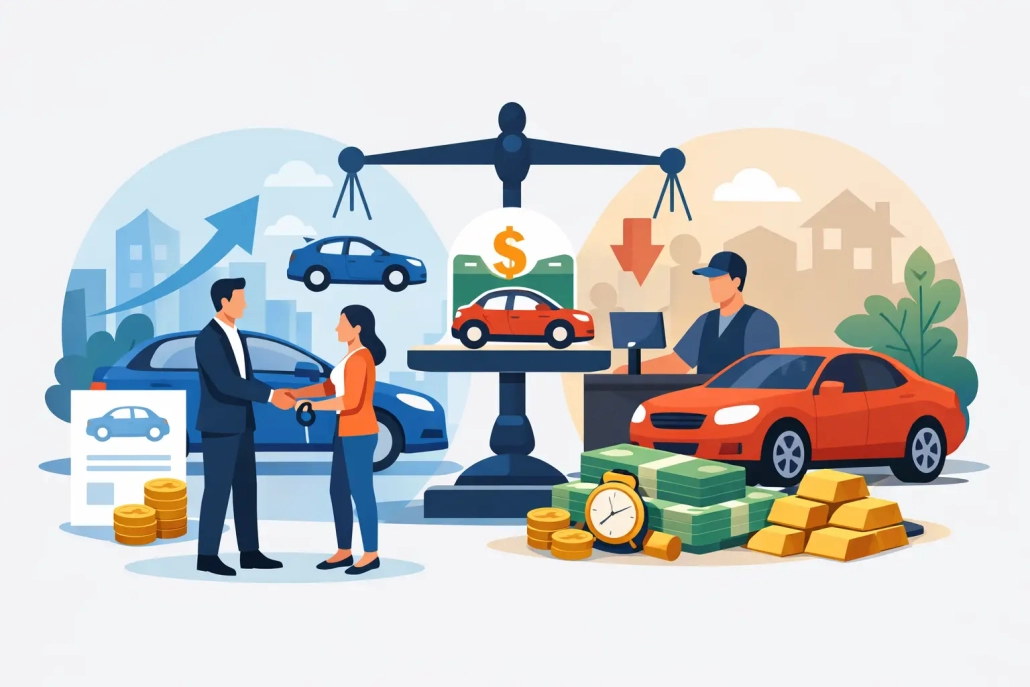
A blown gearbox, overdue supplier invoice or bill that cannot wait can put you under real pressure. When you need funds now, the question is whether to sell or pawn your car. Both can put cash in your hand quickly, but they lead to very different outcomes.
Selling is final. Pawning lets you use the value in an eligible vehicle as security for a short-term loan, with the option to get it back once the loan and agreed charges are repaid. The right choice comes down to how much cash you need, whether you can realistically repay it, and how important that car is to your work and daily life.
Sell or pawn your car: the key difference
When you sell your car, you transfer ownership to someone else and receive the agreed sale price. There is no repayment to make, no loan contract and no risk of losing the car later because it has already been sold. That can make sense if the vehicle is surplus to your needs, expensive to keep, or worth more to you as cash than as transport.
Pawning your car is different. You take out a secured loan against the vehicle’s value. The vehicle is held as security while the loan is active. If you repay the amount borrowed plus the agreed interest and fees by the due date, you redeem the vehicle. You keep the option of getting it back.
For plenty of Queensland drivers, that distinction matters. A ute may be essential for a trade job. A family car may be needed for school runs once the immediate cash problem has passed. Selling can fix today’s shortfall, but it can also leave you without the asset you depend on next week.
When selling your car makes more sense
Selling is usually the cleaner option when you have already decided you no longer need the vehicle. Perhaps you have a second car sitting in the driveway, a project car you will not finish, or a vehicle with ongoing repair costs that no longer stack up. A private sale may achieve a stronger price than a quick sale, but it takes time, advertising, inspections and negotiation.
A dealer or cash buyer can be faster, although convenience often comes with a lower offer. You also need to account for the practical cost of being without the vehicle. Replacing it later may be harder and more expensive than expected, particularly if you need reliable transport for work.
Sell only after checking the numbers. Look at the likely sale price, any outstanding finance, transfer requirements, insurance and the cost of alternative transport. If there is money owing on the car, you cannot simply treat the full sale price as available cash.
When pawning your car may be the better move
A vehicle-backed loan can suit a short, defined cash-flow gap. You may be waiting on an invoice, catching up after an unexpected repair, covering urgent household costs, or buying stock for a small job that will be paid shortly. In these situations, selling a useful asset for a temporary problem can be a bigger sacrifice than necessary.
The main advantage is speed and simplicity. With an eligible vehicle, the lender assesses the asset rather than your credit score. That can be useful if a bank application is unlikely to be approved, takes too long, or asks for paperwork you cannot pull together under pressure.
At AutoPawn, eligible customers can access a loan secured against an unencumbered, registered and roadworthy vehicle or item of equipment. This can include cars, motorbikes, boats, jet skis, caravans, trucks, vans and machinery. The amount available is based on the asset’s wholesale value, not what you originally paid for it. Loans can be advanced up to 55% of wholesale value.
That lower lending percentage is not a trick. It reflects the fact that the asset is security and gives the lender room to manage the risk if a loan is not redeemed. It also means a vehicle that looks valuable on a private-sale listing may not support the loan amount you had in mind.
Do not decide on speed alone
Fast cash helps, but it should not stop you from asking the right questions. Before you pawn a vehicle, know the exact amount you will receive, the repayment date, the interest and fees, and the total amount required to redeem it. Ask what happens if you need more time and whether an extension is available under the agreement.
Be honest about your repayment plan. “I should be right” is not a plan. A confirmed payday, a booked job, an invoice due from a reliable customer or funds arriving from a known source is more solid. If there is no realistic way to repay within the term, selling may be less risky than taking on a loan you cannot meet.
You should also be clear about possession. In a vehicle pawnbroking arrangement, the asset is generally kept secure by the pawnbroker for the loan period. If you need the car every day to earn income, ask whether being without it will create another financial problem. A loan against a boat, caravan, motorbike or unused machinery may be more practical if you have another eligible asset.
What affects how much you can borrow?
The make, model, age, condition and resale demand of the vehicle all affect its assessed wholesale value. So do kilometres, service history, registration status and whether the vehicle has any mechanical or cosmetic issues. A clean, popular work ute with good tyres and a complete service record will generally be easier to value than a damaged or unusual vehicle with uncertain history.
Ownership matters just as much. The vehicle needs to be unencumbered, meaning there is no finance company or other party with a claim over it. It must also be registered and roadworthy. Bring identification and the documents needed to show you own the asset. Clear information helps avoid delays when time matters.
Do not spend money on unnecessary detailing or cosmetic work just to chase a slightly higher valuation. Fixing a serious safety issue is one thing. Throwing hundreds of dollars at minor scratches when you need cash urgently is another. Be upfront about condition and let the assessment determine the figure.
A practical way to make the call
Start with one question: do you want this vehicle back? If the answer is no, get realistic sale quotes and compare what you would actually receive after any debt or selling costs. If the answer is yes, determine the minimum amount you need and whether a short-term secured loan can cover it without putting your repayment ability under strain.
Next, avoid borrowing more simply because the vehicle can support it. Borrowing only what solves the immediate problem keeps the redemption amount more manageable. A smaller loan can be the smarter loan.
Finally, read the agreement before signing. A straightforward lender should explain the terms in plain language and answer direct questions without pressure. Check the due date, total repayment, storage arrangements, default process and your options if circumstances change. No credit check does not mean no responsibility – it means the security is the vehicle rather than your credit history.
If you cannot redeem the loan
This is the hard part, and it should be understood before you proceed. If a pawn loan is not repaid or otherwise resolved under its terms, the lender may sell the secured vehicle to recover what is owed. That is why vehicle pawning works best as a short-term solution with a clear exit plan, not as a way to postpone an ongoing affordability problem.
There is no shame in needing cash quickly. The practical move is choosing an option that solves the immediate issue without creating a worse one. If your car is an asset you need to keep and you have a realistic way to redeem it, pawning may give you breathing room. If you are ready to part with it and do not need it back, selling may give you a cleaner fresh start.



Leave a Reply
Want to join the discussion?Feel free to contribute!