
Vehicle-Backed Loans vs Payday Loans
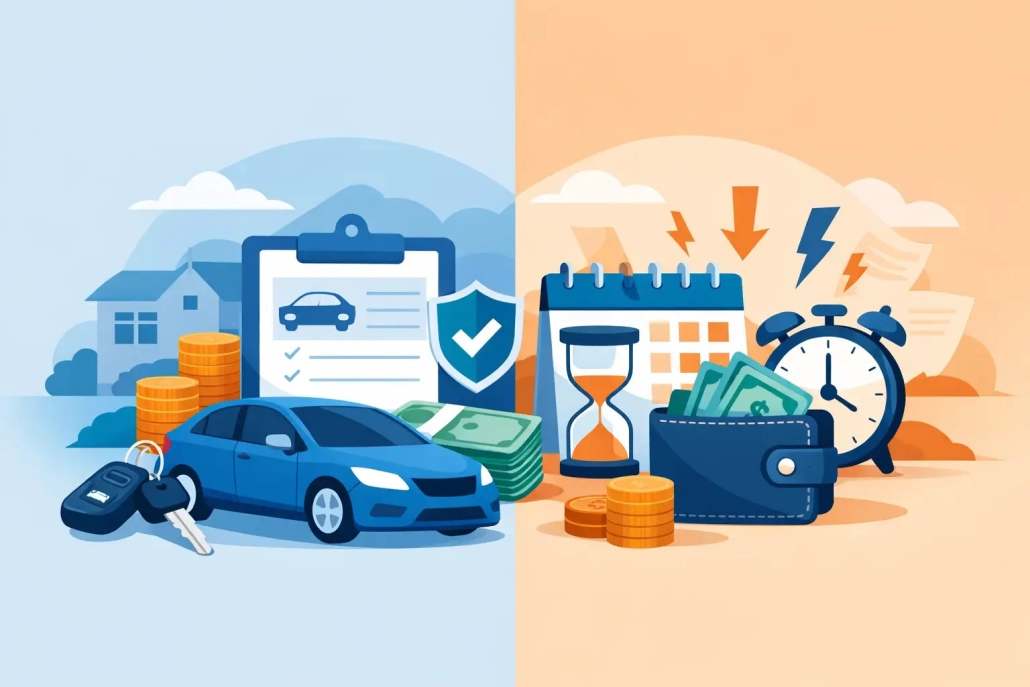
When money gets tight, you do not need a lecture. You need a clear answer. For many Australians weighing vehicle-backed loans vs payday loans, the real question is simple: which option gets cash fast without making the problem worse next week?
Both are used for short-term cash needs. Both can be faster than a bank. But they work very differently, and that difference matters when you are covering overdue bills, paying for urgent repairs, keeping your business moving, or bridging a rough patch until money comes in.
Vehicle-backed loans vs payday loans: the core difference
A vehicle-backed loan is a secured loan. You borrow against an asset you own outright, such as a car, ute, van, motorbike, boat, caravan or machinery. The lender looks mainly at the asset’s value rather than your credit score or income history.
A payday loan is usually an unsecured small loan designed to be repaid over a short period. Because there is no asset backing the loan, the lender relies more heavily on your income, account activity and ability to make repayments from your upcoming pay.
That one difference – secured versus unsecured – affects almost everything else. It changes how much you may be able to borrow, how the lender assesses the application, what documents you need, and what happens if you cannot repay on time.
Why people compare these two options
Most people are not comparing loan products for fun. They are under pressure. The fridge has packed it in. Rego is due. A supplier needs paying. The work ute needs repairs before Monday. Cash flow has gone sideways and the bank is not interested.
That is why these two products get compared so often. They both sit in the fast-cash category. They both appeal to people who want speed, simple approvals and fewer hoops to jump through. But one may suit your situation far better than the other.
How approvals usually work
With a vehicle-backed loan, the starting point is whether you own a suitable asset outright. It generally needs to be registered, roadworthy and unencumbered if it is a vehicle. The lender assesses what it is worth and may offer a percentage of that value. In many cases, the process is straightforward because the focus is on the asset, not your borrowing history.
That can be a major advantage if your credit file is less than perfect, your income is irregular, or you are self-employed and do not have the kind of paperwork mainstream lenders want.
With a payday loan, the lender usually looks more closely at your incoming wages or benefits, bank statements and living expenses. Even though the loan amount may be smaller, the assessment can still be restrictive if your account shows frequent dishonours, heavy existing debt, or unstable income.
So if your main obstacle is credit or paperwork, a vehicle-backed loan can often be the simpler path. If you do not own an eligible asset, a payday loan may be one of the few available options.
Speed matters, but so does friction
Both products are marketed as fast. That part is true, but speed is not just about how many hours it takes. It is also about friction.
A vehicle-backed lender can often move quickly because the asset does the heavy lifting in the assessment. If the vehicle checks out and ownership is clear, the process can be completed fast. For borrowers who need same-day cash, that matters.
Payday lenders can also be quick, especially with online applications, but there can be more back-and-forth around income verification and account history. If your paperwork is clean, that may not be a problem. If it is messy, the process can slow down or end in a decline.
Borrowing amounts are usually very different
This is where vehicle-backed loans stand apart.
A payday loan is generally for a relatively small amount. That can be enough for a short bill gap or emergency expense, but it may not solve a larger problem. If you need money for major repairs, tax debt, supplier payments or a serious personal emergency, the amount available through a payday loan may fall short.
A vehicle-backed loan can often provide access to a much larger amount because it is tied to the value of the asset. If you own a late-model car, work van, boat, jet ski or plant equipment, there may be enough value there to cover more than a minor shortfall.
That does not automatically make it better. Borrowing more than you need is still a risk. But if your cash need is substantial, the secured option may simply be more practical.
What about cost?
This is the part borrowers should slow down and read carefully.
With payday loans, the amount borrowed may be smaller, but fees can add up quickly. Depending on the structure, the loan can feel manageable at the start and then become hard to clear if your budget is already tight. Some borrowers end up rolling one short-term problem into another.
Vehicle-backed loans are also not free money. There are costs, and you should always understand the total amount repayable, the loan term and any charges that apply if repayment is delayed.
The key difference is that secured lending and unsecured payday lending are priced around different risks. Because a vehicle-backed loan is secured, the lender has the asset as protection. With a payday loan, the lender is taking on more risk without collateral, and that often shows up in the cost structure.
This is where the right choice depends on your situation. If you need a very small amount and can repay it quickly without strain, a payday loan may look simpler. If you need a larger amount or want a loan based on what you own rather than your weekly pay cycle, a vehicle-backed loan can make more sense.
Vehicle-backed loans vs payday loans when credit is bad
If you have been knocked back by banks, this comparison gets even more relevant.
Payday lenders do not always require perfect credit, but bad credit can still affect approval. They may decide you cannot afford the repayments, even if the amount is small.
A vehicle-backed lender is often more flexible because the vehicle or equipment secures the loan. That can open the door for borrowers with defaults, irregular income or previous credit issues, provided the asset meets the criteria.
For many working Australians, especially tradies and small operators, that is the practical appeal. The loan is based more on what you own than what a computer says about your past.
The real risk in each option
Every short-term loan has a downside if it is used badly.
With a payday loan, the risk is often repayment pressure. Because repayments can come around quickly, the loan can bite into your next pay and leave you short again. That is how people get caught in a cycle.
With a vehicle-backed loan, the risk is tied to the asset. If you do not meet the loan terms, you are putting something valuable on the line. That means you should never borrow against a vehicle or equipment unless you are confident about the exit plan.
That is not meant to scare you off. It is just the honest part of the conversation. A fast loan should relieve pressure, not create a bigger problem.
Which option suits which borrower?
If you own a suitable vehicle or piece of equipment outright, need a meaningful amount of cash, and want a lender to focus on the asset rather than your credit profile, a vehicle-backed loan is often the stronger option.
If you need a small amount only, do not own an eligible asset, and expect to clear the debt quickly from your next pays, a payday loan may be the more accessible option.
For business owners, tradies and anyone whose income moves around from week to week, vehicle-backed lending can be especially useful. A late BAS payment, a slow-paying client or an urgent repair job does not always line up neatly with a payday lender’s affordability checks. An asset-based loan can be more flexible in real life.
That is one reason services like AutoPawn have remained relevant for so long. They fit the people who need action, not paperwork.
Questions to ask before you choose
Before signing anything, ask what the total repayment is, how long you have to repay, what happens if you are late, and whether the loan genuinely fixes the problem you are facing.
Also ask yourself a harder question: am I solving a short-term gap, or am I borrowing to cover a budget that is already under too much stress? If it is the second one, the loan type matters, but your broader plan matters too.
Fast cash can be a useful tool. The wrong loan can also drag out the pressure.
If you are choosing between these two, go with the option that matches the size of your need, your ability to repay, and what you can realistically put forward. The best short-term loan is not the one with the loudest ad. It is the one that gives you breathing room without boxing you in later.



Leave a Reply
Want to join the discussion?Feel free to contribute!