
Business Asset Loan Example: Cash From Your Ute
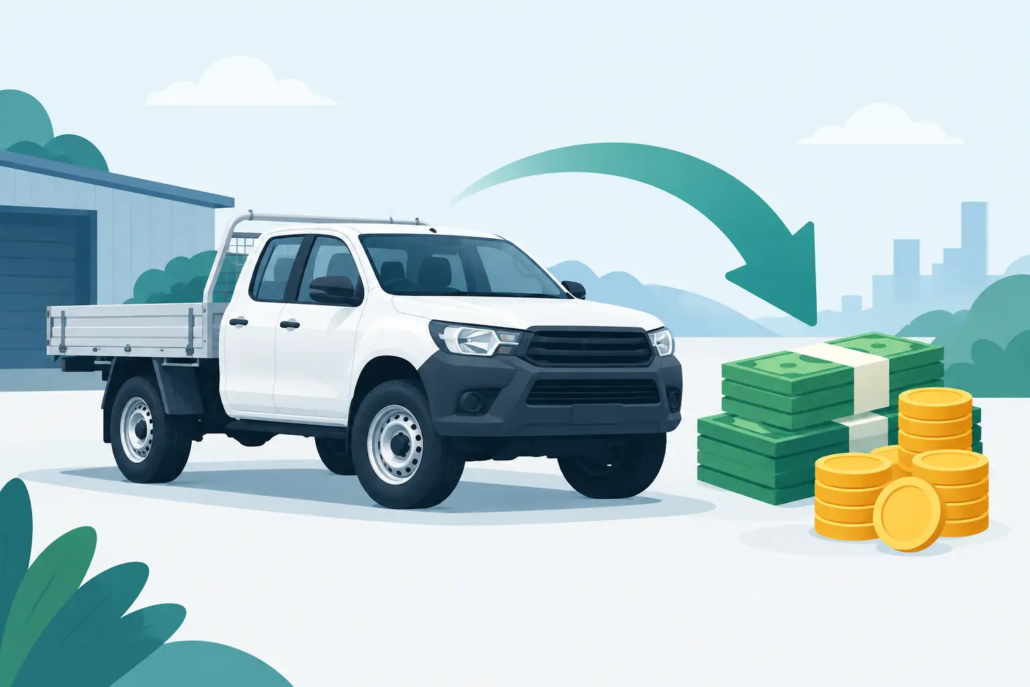
A broken excavator, overdue supplier account or quiet month can put real pressure on a small business. This business asset loan example shows how an eligible vehicle or piece of equipment can be used to raise short-term cash without waiting on a bank decision, providing payslips or going through a credit check.
For many tradies and business owners, the asset sitting in the driveway, shed or yard may be worth more than a long application form. The loan is assessed mainly on the value of the asset, not your credit history.
A practical business asset loan example
Meet Dan, a Brisbane plumber who owns a 2021 dual-cab ute outright. The ute is registered, roadworthy and has no finance owing on it. A major commercial customer is late paying an invoice, but Dan still needs to cover wages, materials and a repair to a second work vehicle this week.
Dan needs $12,000 quickly. His bank asks for financials, bank statements and time to assess the application. That does not solve a cash-flow problem due on Friday.
Instead, Dan applies for a loan secured against his ute. After the ute is inspected and its wholesale value is assessed, the lender determines how much can be advanced against it. With a vehicle-backed pawn loan, the amount may be up to 55% of the asset’s wholesale value, subject to its condition, age, demand and paperwork.
If Dan’s ute has a wholesale value of $30,000, a loan of up to $16,500 may be available. He chooses to borrow $12,000 – enough to deal with the immediate bills without borrowing more than he needs.
The ute is held securely for the agreed loan period. Dan receives the cash, pays the urgent expenses and collects outstanding invoices. When he repays the loan and agreed charges within the term, he redeems his ute.
That is the basic model: an asset you own is used as security for fast funds. It is direct, practical and designed for situations where timing matters.
What makes an asset suitable?
Not every business asset will qualify. The strongest candidates are assets with a clear resale value and documentation that proves ownership. Vehicles and equipment also need to be in reasonable condition.
At AutoPawn, commonly considered assets include cars, utes, motorbikes, vans, trucks, caravans, boats, jet skis and machinery. For a business owner, that could mean a work ute, tipper truck, skid steer, forklift, trailer or another valuable item used in day-to-day operations.
The key requirements are usually straightforward. The asset should be owned outright, registered where registration applies, and roadworthy if it is a vehicle. It also needs to be available for inspection and free of existing finance. If money is still owed to a bank or finance company, that lender normally has an interest in the asset, which can prevent it being used as security.
Ownership matters just as much as value. Bring the identification and documents needed to show that the asset belongs to you. If an asset is in a company name, trust name or shared ownership, ask what paperwork is required before you apply. Getting this clear early can avoid delays.
How the loan amount is worked out
A business asset loan is not based on the retail price you see in online ads. It is generally based on wholesale value – what the asset could realistically be sold for through a trade channel. That is why a clean, well-maintained and popular ute may support a stronger loan amount than an older vehicle with mechanical issues.
Several things can affect the assessment: make and model, age, kilometres or hours worked, overall condition, service history, registration status, market demand and any modifications. Machinery is assessed in much the same way. A well-known machine with clear details and working equipment is easier to value than an unusual item with missing records.
The maximum available does not have to be the amount you take. Borrowing only what covers the short-term gap can make repayment simpler. In Dan’s case, he could potentially access more than $12,000, but his actual need is $12,000. Keeping the loan matched to the problem is a sensible approach.
The process when cash cannot wait
Traditional business finance can be useful for planned purchases, expansion or long-term equipment needs. But it can be slow and document-heavy. A secured asset loan is built for a different job: a short-term need where you have a valuable asset and need a clear answer fast.
The process starts with details about the asset. This may include the make, model, year, registration, kilometres or hours, condition and ownership details. The asset is then inspected and valued. Once the loan terms are agreed and the required paperwork is complete, funds can be provided the same day – often within the hour.
There are no credit checks, proof of income requirements or application fees in the usual sense of mainstream lending. The asset provides the security. That can help if a slow-paying client, a past credit issue or irregular income would make a bank application difficult.
It does not mean the decision should be rushed. Ask for the full repayment amount, the loan term, charges and what happens if you cannot redeem the asset by the due date. Straight answers matter when the asset is essential to earning a living.
When this option makes sense
A business asset loan can suit a temporary, defined cash shortage. Common examples include covering wages before invoices clear, paying for urgent vehicle repairs, replacing a failed tool or machine, buying materials for a confirmed job, handling a tax bill or bridging a seasonal slowdown.
It may be less suitable if you need long-term capital, are already struggling to meet regular commitments or cannot manage without the asset for the loan period. A builder who relies on one truck every day, for example, needs to weigh the value of fast cash against being without that truck temporarily.
There is also the risk of not being able to repay and redeem the asset. With pawnbroking, the asset is the security. Make sure you understand the terms and have a realistic plan for repayment before proceeding. Fast money should relieve a short-term problem, not create a bigger one later.
Get ready before you make an enquiry
A few minutes of preparation can make the assessment quicker. Have your photo ID, proof of ownership, registration papers where relevant and any service records available. Remove personal items from the vehicle or equipment, and be upfront about condition or faults. A clean, honest description helps get the right answer sooner.
If you have an exact figure in mind, explain what the money is for and how much you need. You do not need to share your whole business plan, but knowing your repayment plan helps you decide whether the loan is right for you.
For Southeast Queensland business owners, a valuable asset can be more than a work tool. When an unexpected bill lands, it can also be a practical way to create breathing room – provided you borrow carefully, understand the terms and have a clear path to get your asset back.



Leave a Reply
Want to join the discussion?Feel free to contribute!