
How to Borrow Against Machinery for Fast Cash
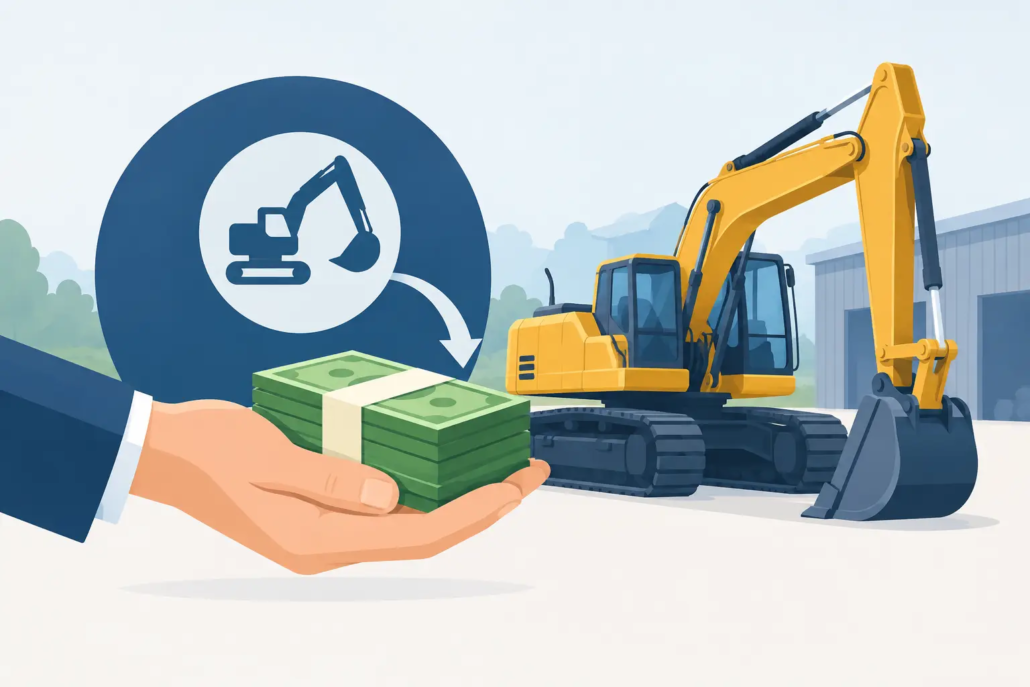
A broken work vehicle, overdue supplier account or surprise repair bill can put a trades business under pressure fast. Knowing how to borrow against machinery gives you another way to raise cash using an asset you already own, rather than waiting on a bank or applying for an unsecured loan.
For many Queensland machinery owners, the practical answer is a secured pawn loan. Your machine is assessed on its value, you receive an offer based on that value, and the machinery is held securely for the loan period. If you repay the agreed amount and charges within the term, you collect it back. It is straightforward, fast and based on the asset – not your credit history.
What does borrowing against machinery mean?
Borrowing against machinery means using eligible, owned equipment as security for a short-term loan. Depending on the machine and lender, this can include excavators, skid steers, loaders, tractors, forklifts, compressors, generators, access equipment, agricultural equipment and other valuable plant.
Unlike a traditional business loan, the lender is mainly interested in the machinery itself. They assess what it is, its condition, age, make, model, hours, market demand and resale value. If the asset has clear ownership and sufficient value, it may be suitable security.
This approach can suit operators who need funds quickly and do not want weeks of paperwork, financial statements or questions about their credit score. It can also help when cash is tied up in equipment but an immediate expense cannot wait.
There is a trade-off. The machinery is your collateral, so it needs to be stored with the lender for the duration of a pawn loan. That makes this option best for equipment you can do without temporarily. If the machine is essential to a job booked for tomorrow, consider the cost of having it off-site before proceeding.
How to borrow against machinery: the practical process
The process should be clear from the start. A reputable asset lender will explain what they can consider, what documents are required and what happens if you repay or cannot repay the loan.
1. Check that the machinery is eligible
Start with ownership. The machinery generally needs to be yours outright, with no finance owing or other security interest over it. Bring any proof of purchase, registration details where applicable, service records or identifying information you have. These details help establish ownership and make the assessment faster.
Condition matters too. A clean, working machine with a known service history will usually be easier to value than equipment with major faults, missing parts or unclear identification. You do not need showroom-perfect machinery, but be upfront about its condition. An accurate assessment avoids wasted time.
2. Get the machine assessed
The lender will inspect the machinery and consider its wholesale value, not simply what similar equipment is advertised for online. Advertised retail prices can be optimistic and do not always reflect what a machine would sell for in a timely resale situation.
At AutoPawn, loans can be advanced up to 55% of an asset’s wholesale value. The exact amount depends on the individual machine, its condition and current demand. High-demand, well-maintained equipment with clear ownership can generally support a stronger offer than specialised machinery with a limited resale market.
It helps to have the make, model, serial number, year, operating hours and any useful accessories ready. Clear photos can assist with an initial conversation, although an in-person inspection may still be needed before a final offer is made.
3. Review the loan offer carefully
Once the machinery is valued, you will be offered a loan amount and given the repayment terms. Do not focus only on how much cash you can receive. Ask for the full repayment amount, the due date, any interest and fees, extension options, and what needs to happen for you to collect your machinery.
A short-term secured loan is designed for a temporary cash gap, not a long-term funding plan. Borrow only what you need and only when you have a realistic way to repay it. If an upcoming invoice, settled job or expected payment will cover the loan, this can be a practical bridge. If there is no clear repayment path, pause and consider whether the risk to your equipment is worthwhile.
4. Complete the paperwork and receive your cash
Asset-backed lending is typically far simpler than a bank application. For eligible machinery, the focus is on confirming your identity, ownership and the asset’s value. There is no need to wait for a credit decision based on your borrowing history.
With the right details and a suitable asset, funds may be available the same day, often within the hour. That speed can make a real difference when a supplier needs payment, wages are due, or an urgent repair is holding up work.
5. Repay and collect your machinery
When you repay the loan and agreed charges by the due date, you collect your machinery. Keep the loan paperwork and make a note of the repayment date immediately. Treat it as seriously as any other business commitment.
If circumstances change, contact the lender early rather than ignoring the due date. Ask whether an extension or renewal is available and what it will cost. Waiting until the last minute reduces your options. If the loan is not redeemed under the agreement, the lender may sell the machinery to recover the debt, so clear communication matters.
What machinery can be used as security?
The best machinery for a secured loan is usually equipment with a recognised brand, identifiable specifications, reasonable condition and an active resale market. Construction plant, farm machinery, industrial equipment and mobile trade equipment can all be considered where they meet the lender’s criteria.
Not every machine will qualify. Equipment that is severely damaged, very old, difficult to transport, heavily modified or subject to existing finance may not provide enough security. Likewise, a machine with little demand can be harder to value and sell, which may reduce the amount available.
Registered and roadworthy equipment may be particularly straightforward to assess where registration applies. For unregistered plant, clear serial numbers, purchase records and a demonstrable ownership history become even more important.
Why machinery-backed loans can make sense
Traditional lenders often assess your income, credit report, bank statements, business performance and ability to service a loan. That can be slow, particularly for sole traders, seasonal operators or people recovering from a rough financial patch.
A machinery-backed loan takes a different approach. The value of your asset drives the decision. That can mean no credit checks, no proof of income and no lengthy traditional loan paperwork. For an owner with valuable equipment but limited cash on hand, that is a useful alternative.
Privacy is another reason people choose this option. You are not asking friends or family for a loan, selling a machine in a rushed private sale or taking on a high-cost unsecured product without security. You are using an asset you own to address a short-term need.
Still, it is not automatically the right choice. If you need the machinery every day to earn income, losing access to it could cost more than the loan solves. If you have time and a strong credit profile, a lower-cost business finance option may be worth comparing. The right option depends on urgency, repayment certainty and whether you can manage without the asset for the loan period.
Prepare before you make the call
A little preparation can speed up the process. Have your photo ID ready, along with proof that the machinery belongs to you. Write down the make, model, year, serial number and operating hours. Gather service records, registration documents where relevant, manuals and receipts for major upgrades.
Clean the machine enough for a proper inspection and be honest about faults. A lender will find serious issues during assessment, so there is no benefit in hiding them. Accurate information helps produce an offer that reflects the real position and avoids delays when you need money quickly.
If cash pressure is building, act while you still have choices. A clear assessment and a realistic repayment plan can turn machinery sitting idle into a practical short-term solution – without letting a temporary bill become a bigger problem.



Leave a Reply
Want to join the discussion?Feel free to contribute!