
Do Pawn Loans Need Credit Checks?
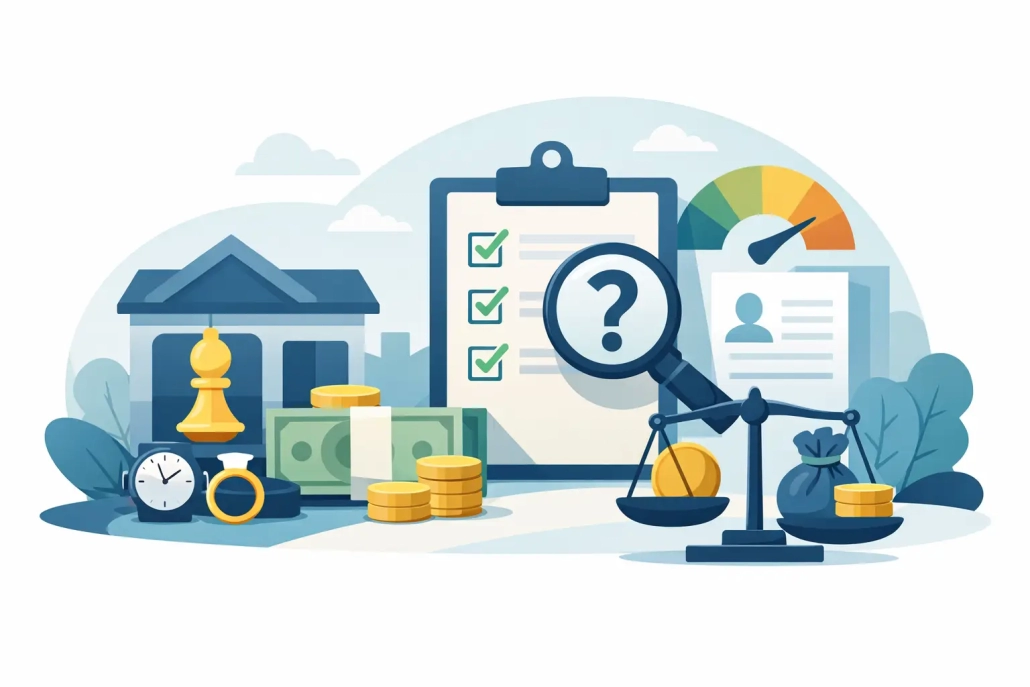
When the bank says no, or takes days to give you an answer, the question gets very simple: do pawn loans need credit checks? In most cases, no. That is one of the main reasons people use pawn loans when they need cash quickly and do not want the hassle of traditional lending.
Pawn lending works differently from a personal loan or credit card. Instead of assessing your borrowing history first, the lender looks at the asset being used as security. If you own something of value outright, such as a car, motorbike, boat, caravan, ute or machinery, that asset is what supports the loan.
Do pawn loans need credit checks in Australia?
Generally, pawn loans do not need credit checks in the same way banks and mainstream lenders do. A bank usually wants to know your credit score, repayment history, income, expenses and existing debts before it decides anything. A pawnbroker is usually more focused on whether the asset has enough value to secure the loan.
That does not mean every lender operates exactly the same way. Some secured lenders may still ask extra questions, request ID, or review basic details about your situation. But the key point is this: a pawn loan is usually asset-based, not credit-score-based.
For people under pressure, that difference matters. If your credit file is less than perfect, or you are self-employed and do not have neat payslips ready to go, a pawn loan can be a more practical option.
Why credit checks are often not required
The reason is straightforward. With a pawn loan, the lender has security. That lowers risk compared with an unsecured loan, where the lender is relying almost entirely on your ability to repay from future income.
In a vehicle-backed pawn loan, the lender assesses the resale value of the vehicle or equipment. If the asset is registered, roadworthy, unencumbered and in decent condition, it may be suitable security for a same-day loan. The amount offered is usually based on a portion of the asset’s wholesale value, not what you originally paid for it or what you hope to sell it for privately.
That is why someone with a poor credit history may still be approved, while someone with excellent credit but no suitable asset may not be.
What lenders look at instead of your credit score
If the answer to do pawn loans need credit checks is usually no, the next question is obvious: what do they look at?
They look at the asset. First, they need to confirm you own it outright. If there is money still owing on the vehicle, it may not qualify. They also check condition, age, market demand and resale value. A clean, well-kept ute with clear ownership is usually easier to lend against than an unregistered vehicle with major mechanical issues.
They also look at paperwork, but not the same paperwork a bank wants. Identification is still required. Proof of ownership matters. For vehicle-backed lending, registration details are important, and the vehicle usually needs to be roadworthy. The process is still professional and compliant, just much simpler than a full bank application.
How a vehicle-backed pawn loan actually works
This is where many people get confused. They hear the word pawn and think of jewellery, tools or small household items left over a counter. Vehicle-backed pawn lending is different in scale, but the basic idea is the same.
You bring in an asset you own. The lender assesses it and offers a loan amount based on its value. If you accept the loan terms, the asset secures the funds advanced to you. Depending on the arrangement, the lender may hold the vehicle while the loan is active.
The process is usually fast because the asset does the heavy lifting. There is no drawn-out back and forth over your credit card statements, living expenses or employer references. If the vehicle stacks up, the loan can often be arranged on the same day.
For someone dealing with an urgent bill, overdue rent, supplier payment or repair cost, that speed is often the deciding factor.
When a no-credit-check pawn loan makes sense
A pawn loan is not for every situation. It suits short-term cash needs where speed matters and where you own a suitable asset outright. If you need funds within hours rather than next week, it can be a practical solution.
It can also make sense if your income is irregular. Many tradespeople, subcontractors and small operators do not fit neatly into a bank’s approval system, even if they are capable of repaying. A vehicle-backed loan can be more realistic because it is based on what you own, not just how your paperwork looks.
It is also useful for borrowers who want discretion. Some people simply do not want a credit application trail every time cash gets tight. A secured pawn loan can offer a more direct path when the priority is solving a short-term problem quickly.
The trade-off: faster access, different risks
No-nonsense answer – easier approval does not mean risk-free borrowing. Because the loan is secured against your asset, the main risk is clear. If you do not repay under the agreed terms, you could lose the vehicle or equipment used as security.
That is why pawn loans work best when the repayment plan is realistic. Quick access to cash is useful. Handing over a valuable asset because the loan was never manageable is not. Before taking any secured loan, make sure you understand the repayment amount, the due date, any fees or charges, and what happens if you need more time.
A good lender should explain all of that plainly. No vague language. No surprises buried in fine print.
Do pawn loans need credit checks if you have bad credit?
This is often the real question behind the headline. People are usually not curious about credit checks in theory. They want to know whether bad credit will stop them getting cash.
With many pawn loans, bad credit is less of an issue because the loan decision is based mainly on the asset. If you own a suitable car, van, jet ski, boat or machine outright, the condition and market value of that item matter more than your credit score.
That said, bad credit should not be ignored altogether in your own decision-making. If money is already tight, adding any repayment obligation deserves careful thought. A pawn loan can solve a short-term cash problem, but it should not become a habit for ongoing budget gaps.
Questions to ask before you go ahead
If you are considering this option, ask practical questions. How much can you actually borrow against the vehicle? How long is the loan term? What will the total repayment be? Is the asset insured while it is held? What happens if you need an extension?
Those questions matter more than whether a credit report gets pulled. Fast finance is only helpful when the terms are clear and fair.
It also helps to be realistic about the loan amount. Secured lenders commonly lend against a percentage of the wholesale value, not the full retail value. If you think your vehicle is worth top dollar because of sentiment or private sale ads, the offer may come in lower than expected. That is normal in asset-based lending.
Why many borrowers choose asset-based lending
The appeal is simple. You can turn a vehicle or equipment you already own into working cash without going through a long bank process. For people who are asset-rich but cash-poor for the week, that can be a lifeline.
A carpenter with a paid-off ute, a landscaper with a trailer, or a family with a clear-title second car may have value sitting in the driveway. A pawn loan can make that value usable when timing matters.
That is why lenders like AutoPawn focus on the asset first. For borrowers who need a clear answer quickly, a straightforward secured loan can be far more useful than a complicated application that drags on.
The bottom line on credit checks and pawn loans
So, do pawn loans need credit checks? Usually, no – not in the way banks and mainstream lenders require them. The decision is generally based on the value, condition and ownership of the asset, which is why pawn loans can be a strong option for people who need cash fast and want fewer barriers.
If you own a vehicle or equipment outright and need short-term funds, a pawn loan may give you a practical path forward without the usual credit hurdles. The smart move is to treat it like any serious financial decision: know the terms, know the risk, and make sure the loan solves the problem without creating a bigger one next month.
When time is tight, clarity matters more than jargon. If the loan is simple, secured and workable, that is often exactly what people need.



Leave a Reply
Want to join the discussion?Feel free to contribute!