
Pawn Loan vs Credit Card: Which Gets Cash Faster?
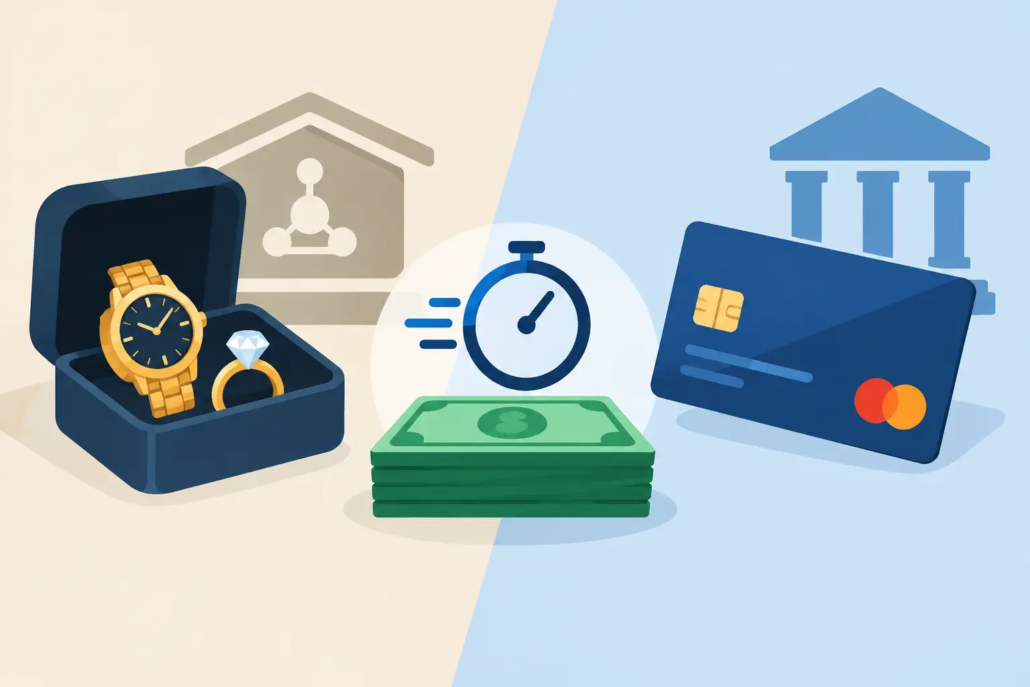
A blown transmission, overdue supplier invoice or surprise vet bill does not wait for your next payday. When cash is tight, the pawn loan vs credit card question usually comes down to one thing: which option gets money sorted quickly without creating a bigger problem next month?
Both can provide short-term funds. But they work in very different ways. A credit card is unsecured borrowing based largely on your credit history and repayment capacity. A pawn loan is secured against an asset you own, such as a registered, roadworthy car, motorbike, boat, caravan, ute or machinery. That difference affects approval, speed, risk and the amount you may be able to access.
Pawn Loan vs Credit Card: The Key Difference
A credit card gives you a revolving line of credit. You can spend up to an approved limit, repay it, then use it again. The lender is relying on you to make repayments from your income. If you apply for a new card or request a limit increase, the provider will generally assess your financial position and credit file.
A pawn loan is backed by collateral. Rather than focusing on your credit score, the lender assesses the value and condition of the asset. With vehicle-backed lending, this means checking ownership, registration, roadworthiness and market value. The asset provides the security for the loan.
That can make a major difference for someone who has had credit setbacks, is self-employed, works casual hours or simply does not have time for a long bank application. It does not mean the loan is risk-free. If you cannot meet the agreed terms, your asset may be sold to recover the debt. That is the trade-off for a fast, security-backed option.
When a Credit Card May Make Sense
A credit card can be useful for smaller, planned costs when you already have an available limit and a clear way to repay the balance. If you pay the full statement balance by the due date, you may avoid purchase interest during the interest-free period. That can make a card cheaper than a short-term loan for ordinary spending.
For example, if you need to pay for a $600 part for a job and know an invoice will clear before the card due date, using an existing card could be straightforward. There is no need to put an asset up as security, and you keep control of when and where you spend the money.
The trouble starts when a credit card becomes a long-term cash-flow solution. Interest can apply to unpaid purchase balances, and cash advances often attract interest immediately, sometimes with additional fees. A missed minimum repayment can lead to late fees, higher costs and damage to your credit history. Paying only the minimum may keep the account open, but it can leave you carrying the balance for far longer than expected.
A card also depends on having room in your limit. If it is maxed out, frozen, or you are declined for an increase, it may not help when the pressure is on.
When a Pawn Loan Can Be the Practical Option
A pawn loan may suit you when you own a valuable asset but need funds urgently and do not want to wait through a traditional lending process. The loan amount is tied to the asset’s assessed value rather than an arbitrary card limit. With a vehicle-backed loan, a lender may advance up to an agreed percentage of wholesale value, subject to the vehicle and loan terms.
This can be particularly useful for tradies, small business owners and households dealing with a short gap in cash flow. You may need money to cover wages before a client pays, replace essential equipment, handle emergency repairs or clear a bill that cannot be pushed back.
The process is usually simpler than applying for unsecured finance. You provide proof that you own the asset, along with identification and relevant vehicle details. The lender assesses the asset and explains the loan offer. If you accept, funds can be available the same day, often within the hour, depending on the asset and documentation.
For borrowers who do not want a credit check or who have been knocked back elsewhere, this approach can remove a common barrier. At AutoPawn, the focus is on the value of eligible vehicles and equipment, not a customer’s credit score or income paperwork.
Speed: Existing Card Versus New Finance
If you already have an unused credit card limit, tapping your card at the counter is hard to beat for speed. The payment is immediate. But that only applies if the limit is available and the merchant accepts cards. Paying rent, bills, a private seller or a supplier may involve processing delays, card surcharges or cash-advance rules.
If you need a new card, speed changes completely. Approval can take time, and a card still needs to be issued before you can use it. A higher credit limit is not guaranteed, particularly if your credit record or recent applications raise concerns.
A pawn loan is designed for a different situation: you need a lump sum now, have an eligible asset, and want a decision based on that asset. It is not as instant as using a card already in your wallet, but it can be far quicker than applying for a new unsecured product.
Costs: Compare the Full Repayment, Not Just the Rate
Do not choose either option based on the word “interest” alone. Ask what you will pay in total and when it must be paid. Credit card costs can include annual fees, purchase interest, cash-advance interest, late fees and surcharges charged by merchants. The rate may look manageable until a balance rolls over month after month.
Pawn loan costs are set out in the loan agreement and may include interest and fees permitted under the relevant rules. The key question is simple: what is the total amount required to redeem your asset by the agreed date? Read the contract carefully and ask for clarification before you sign.
The cheapest option depends on your repayment plan. A credit card may be lower cost if you can clear the balance inside an interest-free period. A pawn loan may be more practical when the alternative is a cash advance, a declined application, late bill penalties or missing an opportunity that costs your business money.
Risk: Your Credit File or Your Asset
With a credit card, failure to keep up with repayments can affect your credit record and lead to collection action. Because the debt is unsecured, the lender does not have a specific asset held as security at the start. However, the debt does not disappear, and the consequences can follow you for years.
With a pawn loan, the asset is the security. That creates a clear and immediate responsibility. Before using your car, boat, jet ski, caravan or machinery as collateral, ask yourself whether you can repay by the agreed date and what happens if you cannot. If the asset is essential to earning a living or getting the kids to school, the decision deserves extra care.
On the other hand, a properly structured pawn loan can limit the decision to one asset and one defined loan term. Some people prefer that clarity over adding another ongoing balance to a card they already struggle to reduce.
Choose Based on Your Next Repayment Date
The right choice is rarely about which product sounds better. It is about the money you need, how quickly you need it, what security you can offer and exactly how you will repay it.
Use an available credit card for a manageable expense only if you can clear it promptly and avoid costly interest. Consider a pawn loan if you need a larger lump sum fast, own an eligible asset and want an option that does not rely on your credit history. In both cases, do not borrow more than you need just because it is available.
Before you commit, write down the repayment date, the total amount due and the source of the money you will use to repay it. When the plan is clear, fast cash can solve a short-term problem without becoming the next one.



Leave a Reply
Want to join the discussion?Feel free to contribute!