
Pawn Loan or Personal Loan: Which Suits You?
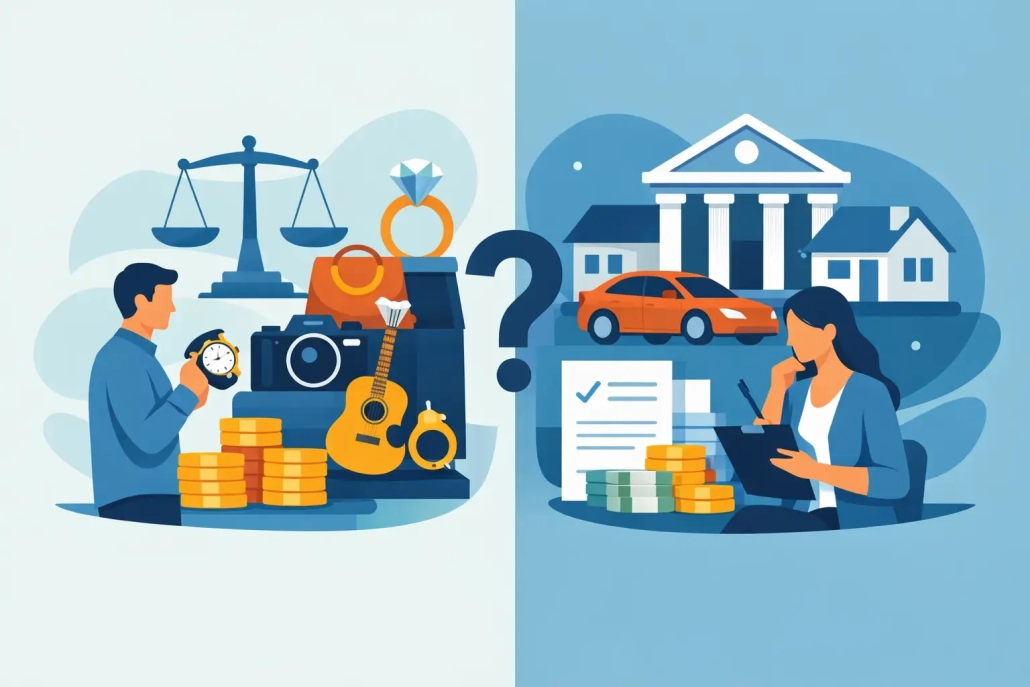
A rego bill, urgent repair, supplier invoice or surprise expense does not wait for a bank appointment. When cash is needed quickly, the question is often simple: pawn loan or personal loan? The right answer comes down to what you own, how soon you need funds, and whether you want your credit history to be part of the decision.
A personal loan can suit planned borrowing with time to compare offers and meet lender requirements. A pawn loan secured by a valuable asset can suit people who need a straightforward short-term cash option without the usual credit checks and income paperwork. Neither is automatically better. The practical choice depends on your situation.
Pawn Loan or Personal Loan: The Key Difference
A personal loan is usually assessed on you as the borrower. A bank, credit union or online lender may look at your credit file, income, existing debts, regular expenses and ability to make repayments. If approved, you receive the funds and repay the loan in instalments, usually with interest and fees.
A pawn loan is assessed mainly on the value of the asset you provide as security. With a vehicle-backed pawn loan, that could be a car, ute, motorbike, caravan, boat, jet ski, truck, van or work machinery. The lender checks the asset’s ownership, condition, registration and value, then offers a loan amount based on that asset.
That difference matters when time is tight. If you have an unencumbered, roadworthy vehicle or equipment, the value sitting in your driveway, shed or workshop may help you access cash without a long application process.
When a Personal Loan May Be the Better Fit
A personal loan can make sense when you have stable income, a solid credit profile and time to wait for formal approval. It may also be more suitable for a larger planned expense where you want a longer repayment term and predictable scheduled repayments.
For example, someone planning a home renovation or consolidating debts may prefer to compare personal loan rates and terms over several days. A standard personal loan is designed for this type of borrowing, provided the repayments comfortably fit the household budget.
However, approval is not guaranteed. Lenders may decline applications due to a low credit score, casual or irregular employment, recent missed payments, high existing commitments or limited proof of income. Multiple applications can also create extra pressure when you are already trying to sort out a cash-flow problem.
A personal loan also requires you to look beyond the advertised interest rate. Check establishment fees, monthly account fees, late-payment charges, early repayment conditions and the total amount repayable across the full term. A lower rate is not much help if the application takes too long or you do not qualify.
When a Pawn Loan Can Be More Practical
A pawn loan is built for speed and simplicity. Rather than asking you to prove your borrowing history, the lender focuses on an asset with clear value. For vehicle-backed loans, the vehicle generally needs to be owned outright, registered and roadworthy.
This can be useful for tradespeople waiting on an invoice, small business owners managing a short-term gap, or families facing an unexpected repair or bill. The point is not to take on a loan for everyday spending without a plan. It is to use an asset you already own to deal with a temporary need for funds.
At AutoPawn, loans are advanced against eligible vehicles and equipment, with amounts based on up to 55% of wholesale asset value. The assessment is about the vehicle, not a credit score. That means no credit checks, no proof of income and no traditional bank-style loan paperwork.
For the right asset and circumstances, cash can be available within the hour. That speed can make a real difference when a work vehicle needs repairs, a bill has a deadline, or a short delay could cost you more.
Speed, Credit Checks and Paperwork
The biggest practical difference between a pawn loan and personal loan is often the approval process.
A personal loan application can involve identification, bank statements, payslips, employment details, expense reviews and credit checks. Some online lenders move quickly, but quick does not always mean immediate. If information needs verifying, approval and payment may take longer than expected.
A pawn loan involves an asset inspection and valuation instead. You will still need to show identification and evidence that you own the vehicle, but the process is generally far more direct. The lender wants to know what the asset is worth and whether it meets the lending criteria.
If poor credit or no formal income evidence is likely to block a personal loan application, a secured pawn loan can be a more realistic option. That does not mean it is free money or risk-free. It means the security changes how the lending decision is made.
Consider the Security Before You Borrow
With an unsecured personal loan, there is no specific asset pledged as security. You are still legally required to repay the debt, and missed repayments can lead to fees, collection action and damage to your credit file.
With a pawn loan, the asset is the security. If the loan is not redeemed or the agreed terms are not met, you could lose the vehicle or equipment. That is the trade-off for a lending option that does not rely on conventional credit approval.
Be honest about whether you can repay within the agreed period. Do not secure a vehicle that is essential to your work or family life unless you understand the terms and have a realistic plan to get it back. Ask about the loan period, charges, redemption process and what happens if you need more time.
A good lender should explain this clearly, without vague language or pressure. Fast cash should still come with straight answers.
Compare the Total Cost, Not Just the Cash You Receive
When money is urgent, it is tempting to focus only on the amount you can get today. Take a few minutes to check the full cost of either option.
For a personal loan, look at the interest rate, comparison rate, fees, repayment frequency and total amount payable. For a pawn loan, understand the loan charge, the agreed term and the amount required to redeem your asset. The best option is not always the one offering the largest amount. It is the one you can repay without creating another financial problem next month.
Borrow only what you need. If a $2,000 gap will solve the issue, there is little benefit in borrowing more simply because the asset could support a higher amount. Keeping the loan focused can make redemption easier.
A Quick Way to Decide
A personal loan may suit you if you can wait for approval, have reliable income documentation, meet credit requirements and want to repay over a longer period.
A pawn loan may suit you if you own an eligible asset outright, need funds urgently, prefer no credit check, or do not want to deal with extensive bank paperwork. It can also be useful when your income is irregular but your vehicle or equipment has clear value.
Before choosing either, write down the amount you need, when you need it and how you will repay it. If there is no clear repayment plan, pause and consider whether another solution is available. Borrowing works best when it solves a short-term problem rather than extending it.
Use What You Already Own, With a Clear Plan
The choice between a pawn loan and a personal loan is not about which product sounds better on paper. It is about what works for your time frame, financial position and ability to repay. A personal loan can be useful when you have time and meet the lender’s criteria. A vehicle-backed pawn loan can give you a direct path to funds when the usual lending process is too slow or too restrictive.
If you own a valuable vehicle or piece of equipment and need cash quickly, get a clear valuation, understand the terms and borrow with a plan to redeem. That keeps the decision practical and puts you back in control of the immediate problem.



Leave a Reply
Want to join the discussion?Feel free to contribute!